in discovery
the show starts before places.
vybecall is not built yet. It is a labor of love from someone who has been part of this community and knows how much invisible work it takes to carry a production from choosing the show through strike.
The idea is one home for the coordination, collaboration, and information a company carries: actors, stage managers, producers, directors, and everyone else making the show happen.
What follows is an opening pass: early screens, flows, and ideas for how vybecall might work. They are here to be questioned, improved, and shaped with the people who want to help put this show on.
act one · the work before the work
the people holding the show together.
This is an early idea for keeping the plan clear across the stage manager, creative leadership, company, and departments, without turning coordination into another full-time job.
- 01The Stage ManagerOne source of truth for the entire run of a show.
Calls, notes, and acknowledgements visible without chasing the room.
A nightly report built from the work already done.
- 02The Director and ProducerA shared record of the decisions, notes, and changes shaping the production.
A clear view of how the room is moving, without pulling the stage manager away from running it.
The context behind the work, available when you need it instead of buried across updates.
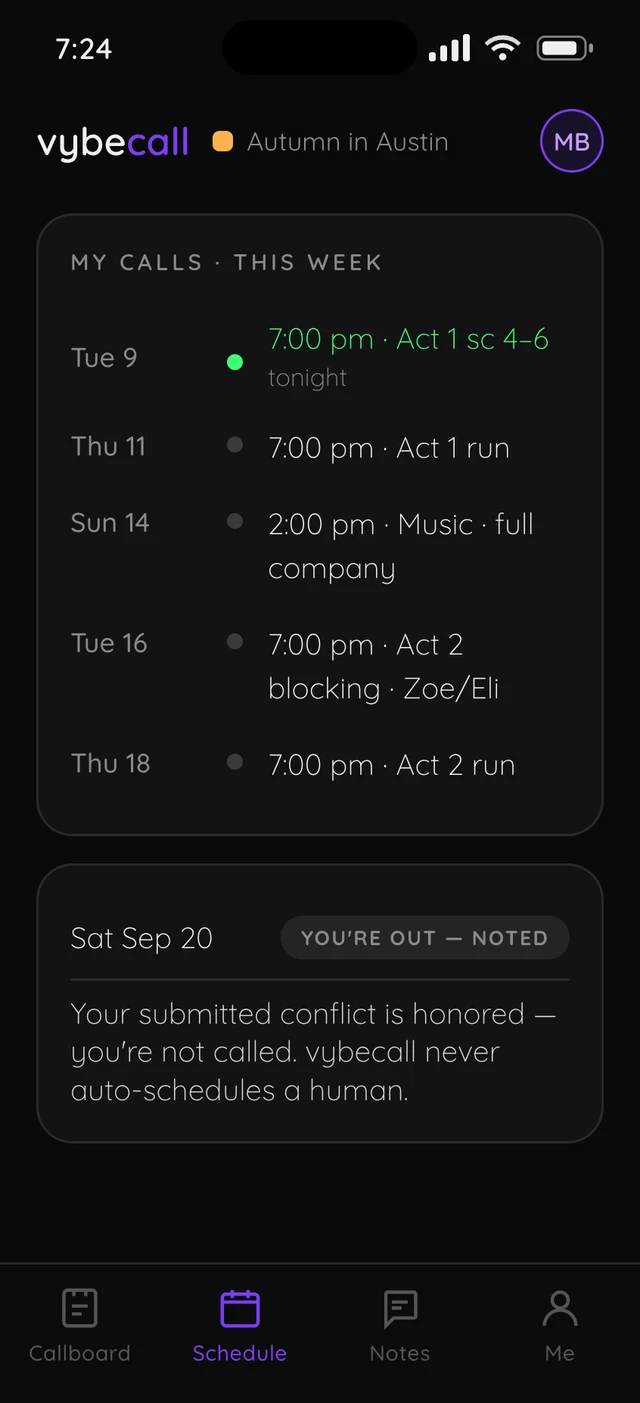
- 03The CompanyOne dependable place for call times, schedule changes, and what to prepare.
A simple way to acknowledge the information that reaches them.
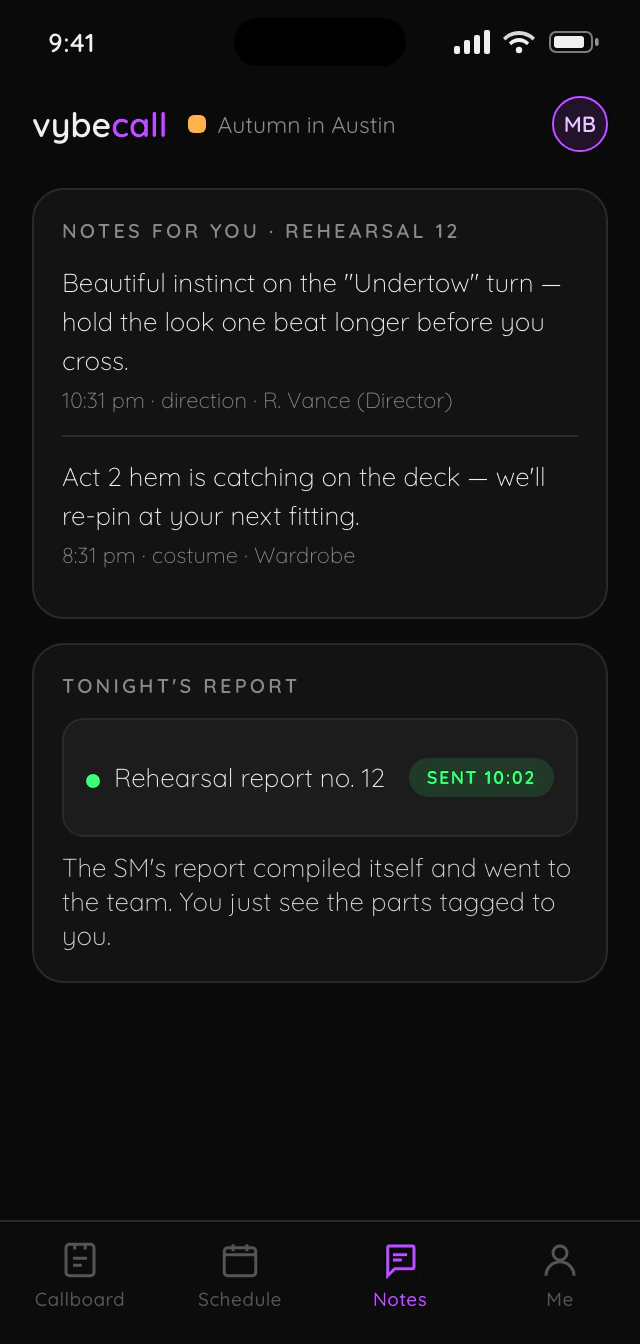
Production notes, readily available directly from the stage manager or director.
- 04The Production DepartmentsNotes and requests routed to the people responsible for them.
Context kept with the work, whether it belongs to lighting, sound, costumes, props, or the pit.
Fewer details lost between rehearsal, the booth, backstage, and the next day.
act two · the company
focus on your character, not your call time.
The company should not have to manage their side of the production through group chats and scattered reminders. This is the light half of the plan: your role, your calls, and the notes that belong to you, ready when you need them.
act three · the life of the show
before the read through. after the curtain call.
A production does not begin at rehearsal, and its work should not disappear when the set comes down. vybecall is being thought through as a companion to the whole run of a show: Building the company, supporting everyone who touches the stage, and keeping its history after close.
before the run
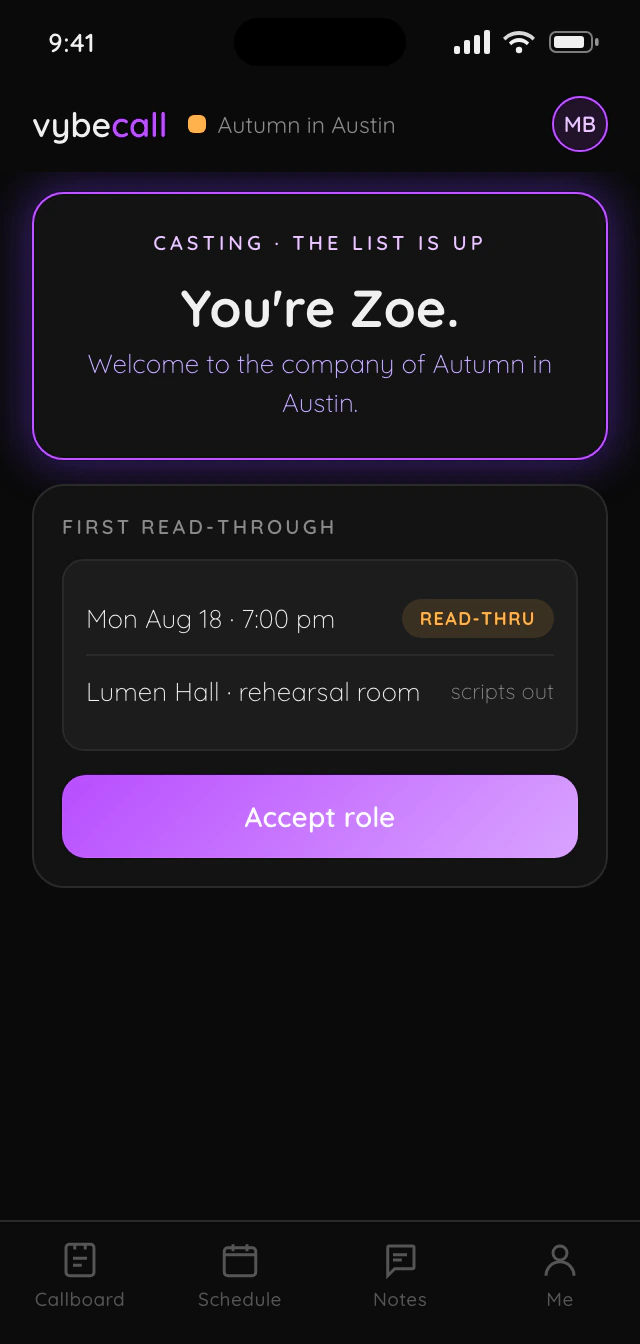
greenlight · auditions · casting · company launch
Start with one shared foundation for the production, before rehearsal begins and before the information starts to scatter.in production
rehearsals · tech · the run
Calls, schedules, attendance, and notes move with the show, from the rehearsal hall to the wings.when the curtain closes
strike · archive
Keep the record of what the company made together, without rebuilding the story later from binders and group texts.
A production does not stand still. Its people, schedule, decisions, and information change from greenlight through strike, and too much of that still lives in separate systems, group chats, and someone's head. vybecall is being designed to keep the thread intact: giving each phase the structure it needs, the right people the information they need, and the company a usable record when the curtain comes down.
the commitment
free for the rooms that teach it.
vybecall is being designed so its core stays free for schools, nonprofits, and community theatres.
This comes from having been part of that community and knowing how much a production asks of the people making it happen. The point is to make the work easier without making access another thing a theatre has to justify in its budget.
The students learning stage management today are the professionals calling shows tomorrow. That is the point, not margin.
where it stands
discovery and design, in austin.
These are working ideas, not finished software. We are sharing them early because the people who actually run productions should have a say in what gets built. The screens are there to start useful arguments: what is missing, what creates more work, and what would genuinely make a production easier to run.
The first concierge pilot will be with an Austin production, so I can be present: in the room, with the people using it, learning from the real thing before anything is offered more broadly.
now
- In discovery
Concept interviews and design reviews with theatre people.
- Design partners wanted
Stage managers, production managers, directors, teachers, and community theatre boards.
- Concept prototypes
The screens on this page, drawn to be argued with.
first
- The concierge pilot
One Austin production, run end to end with us.
- The stage manager's console
A callboard built once. Calls and schedules issued. Notes tagged. The nightly report compiling itself.
then
- What earns its place
We build outward from what the pilot proves belongs in the room.
- The company's view
A clear way for the wider team to stay in the loop without becoming another thing to manage.
- After the pilot
Performance reports, strike boards, and the production archive, shaped by what the first production actually needs.
tell us how your theatre runs.
Check vybecall on the interest form, under discovery feedback, to start the conversation.
 design concept